The road to hell is paved with bizarre mystery in It Ends, the latest excellent horror debut in a summer teeming with them.
First-time writer/director/editor Alexander Ullom’s film is a thriller that thrums with existential dread, embracing the irrational and incomprehensible to unnerving ends. A twisted take on the teen road trip movie, it’s further confirmation that the genre’s future is in masterful hands.
Hot on the heels of Obsession, Backrooms, and Leviticus from big-screen neophytes Curry Barker, Kane Parsons, and Adrian Chiarella, respectively—not to mention fellow seasonal standouts Hokum and Evil Dead Burn—It Ends (August 21 in New York and LA; August 28 nationwide) locates terror in ambiguity and abstraction, all via the story of a young quartet of friends whose evening takes a decidedly inexplicable turn.
Or, rather, it takes no turn at all, as their unassuming journey along a forested stretch of two-lane blacktop becomes, for reasons that wholly escape them, seemingly endless.
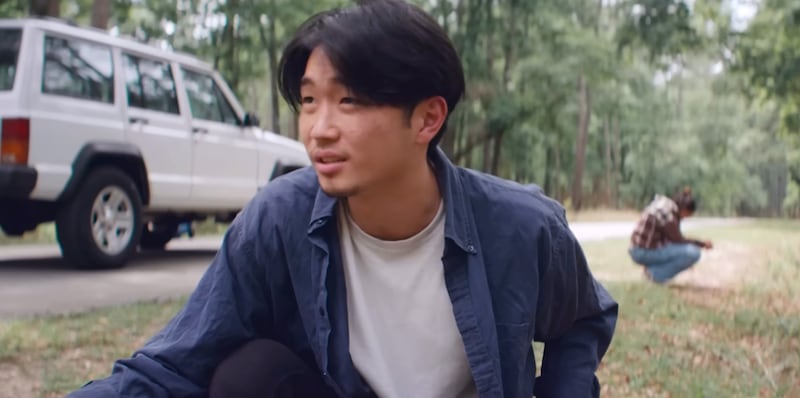
At a location that’s difficult to identify, Tyler (Mitchell Cole) picks up James (Phinehas Yoon), Fisher (Noah Toth), and Day (Akira Jackson) in his Jeep. As they head out, James and Fisher begin a debate—courtesy of a meme—about whether a collection of ferocious animals or a man with a gun would win in a fight.
On a basic level, this conversation is juvenile nonsense. Yet as a hypothetical question with no definitive answer, it winds up being eerily relevant to the ensuing action, in which Tyler determines that, despite their GPS instructions to proceed straight ahead, they’ve been driving too long in one direction. He does a vehicular about-face, and a short time later, they hit a dead end, which James, Fisher, and Day chalk up to Tyler taking a wrong turn. Tyler, however, denies diverting from their path—a puzzling state of affairs which swiftly goes from bad to much, much worse.

[WARNING: Minor spoilers follow.]
In the blink of an eye, these BFFs are beset by a horde of anonymous screaming men and women who emerge from the woods and violently ambush their car in an apparent attempt to commandeer it. During this out-of-the-blue melee, Fisher suffers serious arm scratches, but the rest emerge unscathed, albeit shaken from both the assault and their hasty retreat from the strangers.
Heated post-calamity talk naturally revolves around the nature of their situation. When subsequent stops trigger identical sieges by woodland marauders, the crew starts logically trying to figure out how this craziness works—a transition from the hypothetical to the experimental that yields a few intriguing revelations.
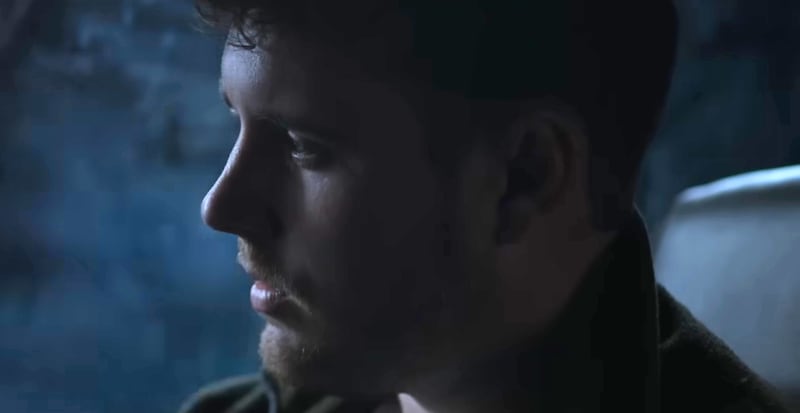
Tyler, James, Fisher, and Day deduce that these attacks commence in a pattern. They also soon realize they’re not hungry or sleepy, and that their car will run indefinitely on magical fumes. While nature is still on a steady 24-hour day-night cycle, the road never meaningfully changes, nor does the forest through which it cuts. For all intents and purposes, they’re trapped, prisoners in their own ride, compelled by circumstance to keep trucking along without respite.
It Ends gives audiences no clues unavailable to its characters, instead embellishing its drama with shots of foliage, sky, and asphalt from a car passenger’s POV—fast, blurry images that contribute to the material’s hallucinatory ominousness. Nothing is distinct in this netherworld save for these four individuals, who gradually come into focus as their predicament escalates.
A military vet with a southern drawl and strange romantic instincts, Tyler is muted and practical. James, on the other hand, is analytical and domineering, which has strained his relationship with not only Tyler but also cagey Day (who has scars she’s not initially ready to reveal) and anxious Fisher, who frequently bristle at James’ efforts to decipher the meaning behind this madness.

Are they dead? In purgatory? Suffering from drug-fueled psychosis? Or the victims of a curse brought about by wrongdoing? James proposes these and other ideas as possible causes for their in-limbo dilemma, allowing It Ends to shrewdly address the very thoughts racing through viewers’ minds.
Nonetheless, those hoping for a neat-and-tidy conclusion shouldn’t hold their breath, since Ullom plays things close to the vest as his characters conduct research, bicker, and mull their fates, convinced they have no choice but to speed onward even though they don’t know where they’re going, or why.
It Ends’ obliqueness allows for multiple readings of its tale—say, as a harrowing allegory about the transition into post-college adulthood; as a philosophical treatise about the limits and necessity of companionship; or as a despairing wail about the pointlessness of seeking purpose in an unfathomable universe.
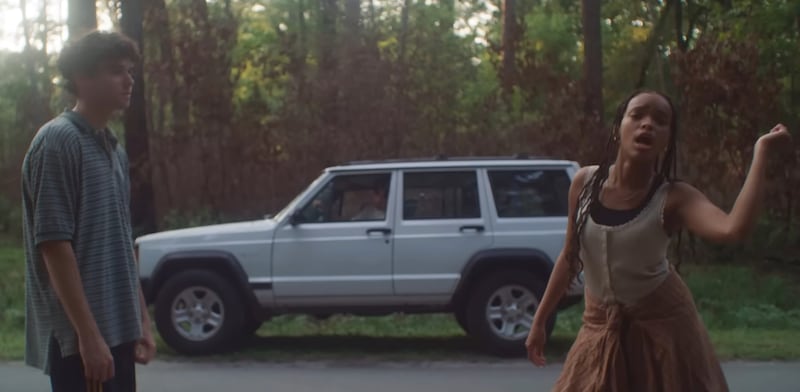
Hints of Kafka, Sartre, and Camus (among others) linger in this nightmare, and Ollum builds suspense from both the external threats surrounding his protagonists and the heavier, troubling internal doubts that mount as their trek continues unabated. All the while, their car grows dirtier, and their dispositions devolve at a similar pace, no matter the “games”—such as “Air Out,” in which they voice their grievances with each other—they concoct to pass the time.
As with Backrooms, It Ends is about haunted spaces and faces, with Ullom creating an evocative interplay between near/far perspectives. A sense of the familiar warping into something inscrutable and unsettling is omnipresent, and the back half’s structural shifts—complete with text cards that divide the proceedings into segments—heighten its overarching instability.

The film presents a world unmoored from reason and sanity, generating an unease that burrows deep into one’s bones. Even in its climax, it refuses to succumb to narrative convention, wisely preferring beguiling disquiet to comforting resolutions.
As its title suggests, there is a literal end in It Ends, although there’s also something after it, suggesting that the secret to this baffling mayhem—and to life itself—is that everything is eternal, be it the yearning for answers, the love-hate dynamic at the heart of close friendships, or the fear of mortality and ephemerality and the attendant desire to spend our brief existences in the company of others.
Make of it what you will, but Ullom’s maiden directorial effort is an absolute stunner, and proof that there’s no end to horror cinema’s chilling inventiveness.