For more insight and commentary from Michael Wolff, subscribe to HOWL on Substack and gain access to exclusive daily content.
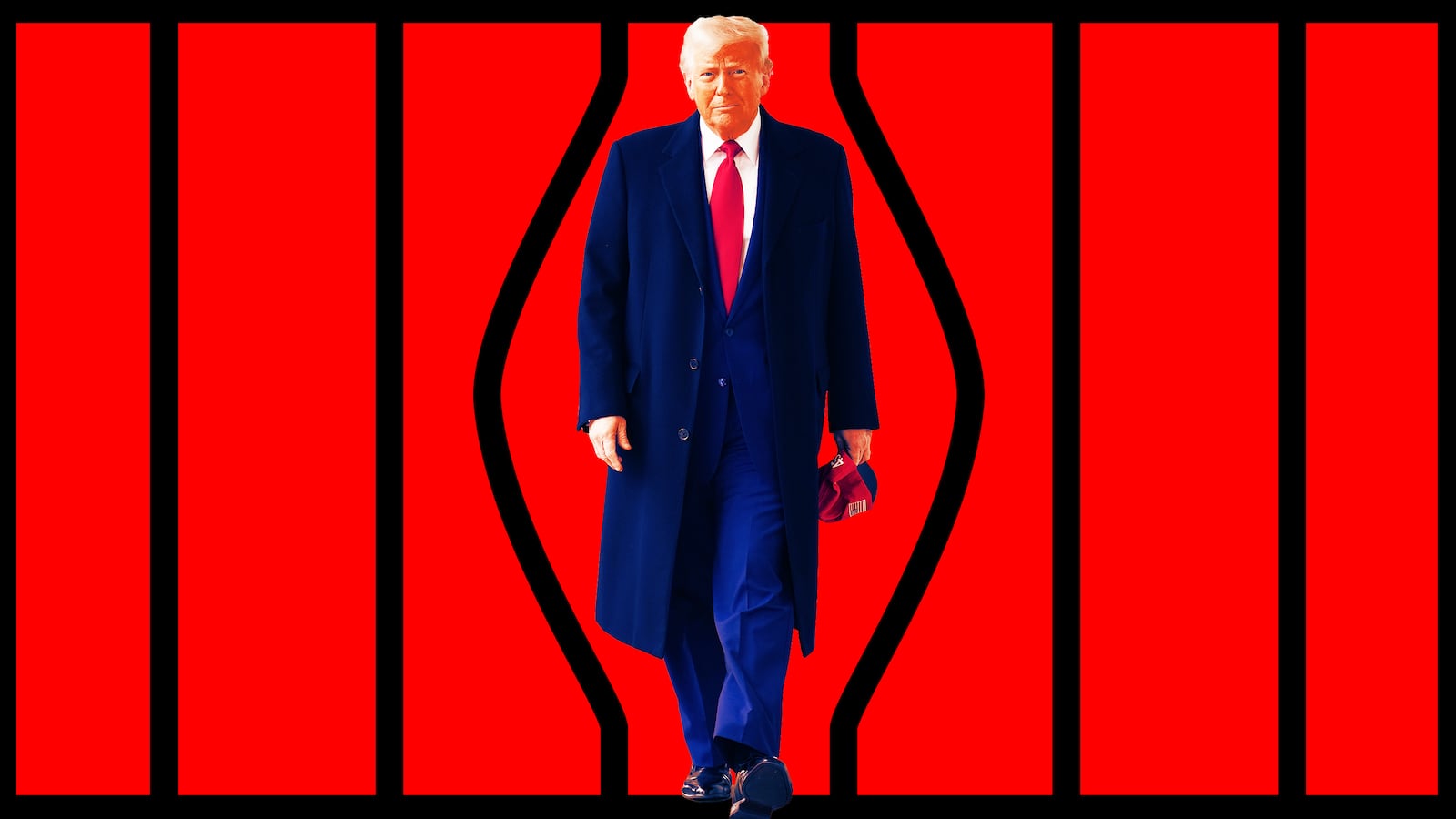
Donald Trump may walk away scot-free from his long friendship with Jeffrey Epstein simply because he has never used email.
The Epstein Files Transparency Act turns out to be one of the most significant email hacks of all time—and a government-approved one at that. It has opened a voyeuristic window into the daily lives and casual behavior of virtually anyone in Jeffrey Epstein’s wide-ranging circle of acquaintances.
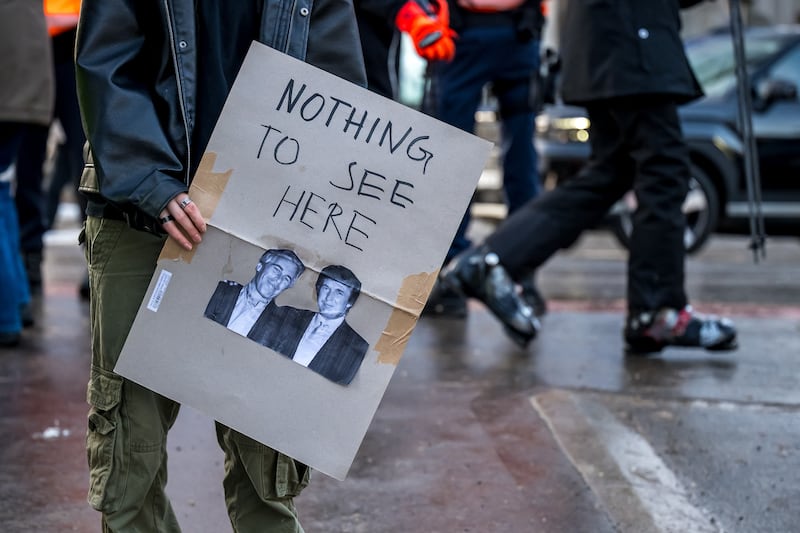
And it’s an extraordinary view, elevating many people without a particular public profile into sudden—and harsh—notoriety, not for crimes they might have committed, but because of the bad luck of being courted by the designated monster of our time. (Most of Epstein’s friendships seem initiated by him.)
I’ll wager the Epstein files dump, forced on the Trump DOJ by a bipartisan coalition, will be remembered as among the leading illiberal acts of this illiberal era.
The files turn out to offer few revelations based on any investigative process. Indeed, the revelation is that the FBI seems to have concluded the evidence offered no clear path to follow. This could, of course, be read as negligence on the FBI’s part—and many will read it like that—but equally it might be read as law enforcement professionals seeing what the general public is seeing: a trail of idle and regrettable comments (Kathy Ruemmler opining on the one thing that really can’t be missed about rest stops on the New Jersey Turnpike, how fat the people are) but little evidence of crime. Indeed, it is not even clear if the evidence on hand supports the DOJ’s 2019 indictment of Epstein.
But it is the email record, a mafia-ish sounding chatter among the wealthy and accomplished, that has become the ultimate guilt by association—mafia-ish not as in the portrait of a criminal enterprise, but as in the raw blah-blah of a wiretap.

The basic points are, of course, obvious. Police investigations are supposed to be confidential. The public release of police information should be strictly related to what is specifically relevant to the crimes or allegations at hand. Basic due process ought to have provided a way for anyone mentioned in this material to object to the relevancy of the disclosures. That did not happen.
The broad call for the release of the “Epstein files” began as a symbolic gesture, rather than an actual goal, not least of all because nobody had much of an idea what was in them (beyond a theoretical wish for investigative materials identifying conspirators in the mistreatment of women). And then there was the happenstance confluence of right and left agendas: Republican congressman Thomas Massie, the grandstander on the right, and Democratic congressman Ro Kanana, the grandstander on the left, were both as surprised as anyone, I suspect, that the release of all these documents actually came to pass.

The result is basic chaos. A public record so large it is not a record at all, but a random catchall, neither truly accessible, digestible, or meaningful. The promise of pictures and videos has not been borne out (indeed, the cry now is that there must be more), nor has an investigative trail. But it can’t add up to nothing, can it, all this “evidence”? In fact, it adds up to anything you want it to add up to, with a million social media accounts claiming instant expertise in the files and offering intricate, conspiratorial accounts, proving once more that the public that self-selects to offer its urgent opinions is pretty stupid, and that the wisdom of crowds is often a mob intelligence.
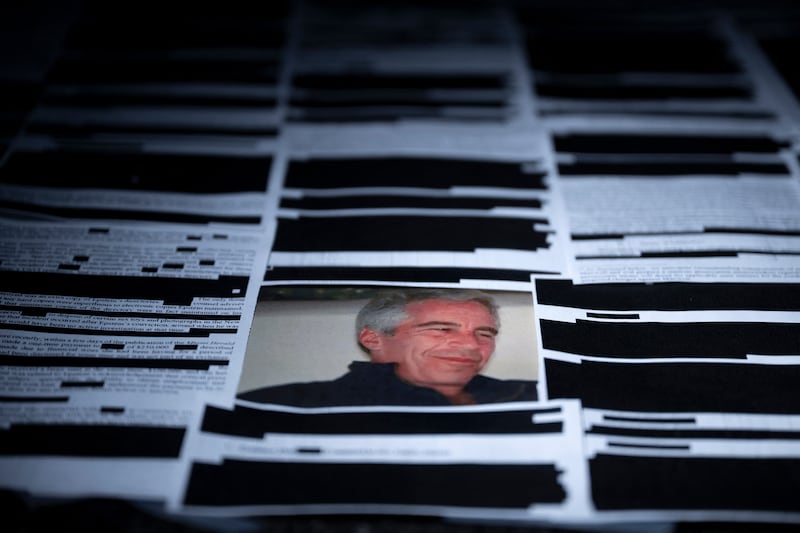
Yes, we can begin to assemble a critique of the elites, but not one about wealth, per se, but instead about email habits. The sociology here is not about social structure, but about how we communicate through email, that weird combination of artifice and transparency, which makes everybody sound like they are both sucking up and conspiring. This can hang anybody, because all friendships are, of course, a kind of conspiracy.
But not Trump.
There’s still a selection of people who use the phone, which is always rather confusing. Nobody, of course, speaks on the phone anymore—except old relatives or, yes, people who specifically don’t want their words preserved (in my personal experience, that’s often people in the movie and television business).
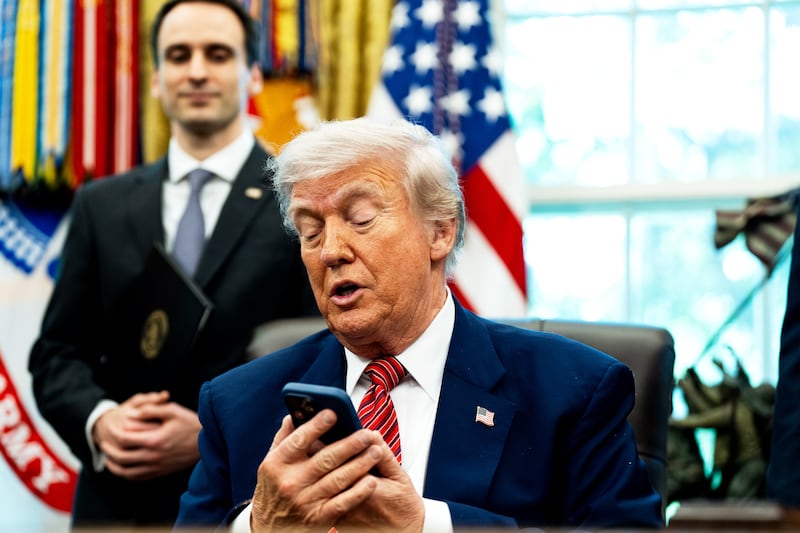
In a way, the indiscriminate use of email indicates a kind of innocence. Whatever you’re thinking, however unclear, however potentially embarrassing, or incriminating, is set down for posterity, just a hack or a subpoena away.
Trump, of course, does not send email for this very reason. He has so long operated on the edge of perfidy, aware of his peril, that he, in his words, isn’t “shmuck enough to leave a record.” He often counsels people around him: don’t say it in email.
For a year, Trump has tried to distract from the Epstein mess. He was, after all, Epstein’s closest friend for the longest period of time, engaged with Epstein for nearly fifteen years in debauchery and grift. But now, millions and millions of documents have been released, and Trump is only a background noise—unlike the other hundreds of people unmasked here with a first-person voice. They now provide the distraction from Donald Trump and his long friendship with Jeffrey Epstein.

Trump’s closest circle has long been as astounded as anybody by his survival abilities. Scandal, obloquy, incompetence, indictment…and yet here he is. Incredible luck is their only explanation. He has been lucky enough again to have the Epstein matter relegated to all the shmucks who, unaware, sent him emails, shining a light on them and leaving Trump safe in the shadows. Exonerating him, he says.
“You come at the king; you best not miss...”
And he gets away with it again.
This article was originally published on HOWL, Michael Wolff’s official publication on Substack. Subscribe to HOWL to support independent journalism and gain access to exclusive daily content.