By the time Donald Trump’s first year back in office ended earlier this week, it was no longer clear what counted as a scandal at all. Actions that once would have triggered hearings, resignations or criminal investigations now landed with a shrug or feigned shock—if there was even time to muster a response before the next sh-tshow landed. Corruption was open, grift was ever-present, constitutional violations routine and abuses of power staggering. The guardrails all but disappeared.
But here’s the bad news: 2025 was just the warm-up. As the old saying goes, you ain’t seen nothing yet.
You might say what’s coming will be unprecedented. But that word has been used so often to describe Trump that it’s lost almost all meaning. What hasn’t lost meaning—at least, not yet —is the idea that things can still get worse.
They can. They will.
What matters now isn’t what Trump has already done, but what he is incentivized to do next. The reason is simple. Trump’s time is running out, both in his ability to operate unchecked and, possibly, in good or even below adequate health.
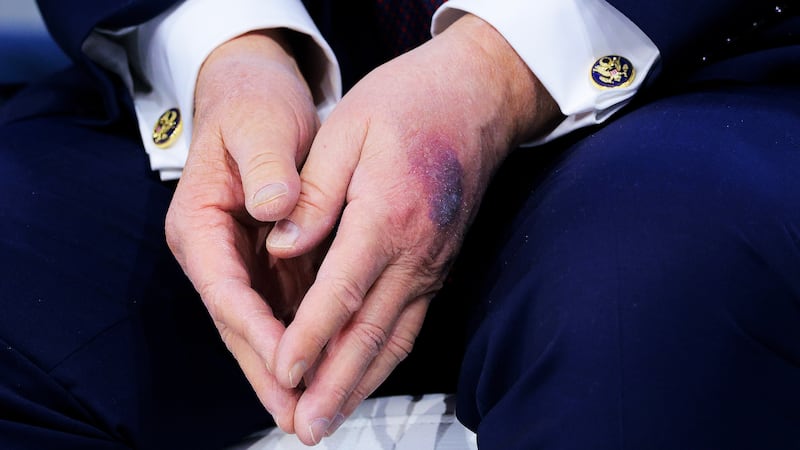
Midterm elections are looming—assuming they happen at all, given Trump’s threats—and if Democrats retake Congress, oversight resumes, subpoenas fly, and impeachment returns to the table. And let’s not forget the odd discourse Trump has often wandered into regarding his chances of getting into heaven—zilch—raising the question of whether he senses the end may be nearer than he lets on. If so, Trump is not the type to have a come-to-Jesus moment.
So as Trump enters 2026, this doomsday clock will become the dominant force in his decision-making. With accountability potentially arriving after the midterms, the coming year isn’t about restraint or consolidation. It’s about acceleration.
This year isn’t about Trump “testing the limits” anymore. Trump has already tested them and discovered something he didn’t have during his first term: There are effectively no limits at all, so long as the right (i.e. the far-right) people surround him. He will go unbound.

Some will argue Trump has always behaved this flagrantly. But that misses the point. Yes, Trump has never respected rules or norms in his privileged, lazy life. But his pattern isn’t recklessness for its own sake; rather, it’s escalation. He pushes until institutions and people flinch, recalibrates, and then pushes further once he learns there are no consequences. Just when you think he’s gone as far as he can, he goes further.

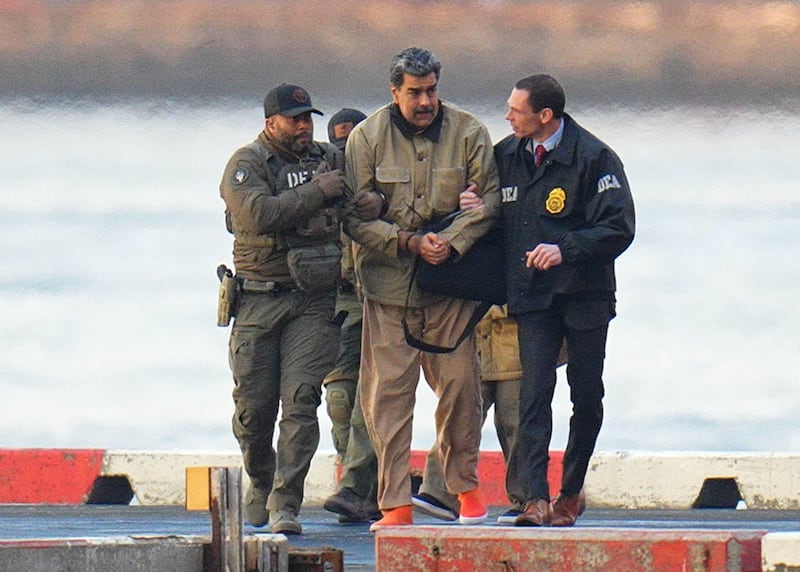
Talk of deploying the military domestically? Unconstitutional. Ha. Accepting the world’s most luxurious jet as a future personal gift? The Emoluments Clause once mattered. No more! Invading a country and kidnapping its leader? International law says no. Oh well. Aren’t those executive orders illegal? Who cares!
Each time, the unthinkable becomes normalized. Each time, we move on. And Trump learns the same lesson: He can do whatever he wants because nothing meaningful stops him.
That lesson was reinforced in a peripatetic New York Times interview, when Trump said the only thing restraining him is his own morality. Not Congress. Not the courts. Not the law. His morality.

That may be the most honest—and terrifying—thing the baloney-babbling Trump has ever said. And not even just because he is entirely amoral to begin with.
Morality, unfortunately, is not a guardrail. It’s a principle, and Trump has none. He has maniacal moods and impish impulses. So if he believes accountability is coming in January 2027, his incentive in 2026 is not restraint. It’s reckless abandon. Full steam ahead.
We’ve already seen how Trump treats presidential power as a license for personal indulgence. Pardons, once an extraordinary presidential power, have been degraded and deranged into a loyalty-for-sale system and self-protection. The January 6 blanket pardons were shocking. That proclamation was the first of his second term, and set the tone. And with each new one, they pale further. By this year’s end, they may look quaint.
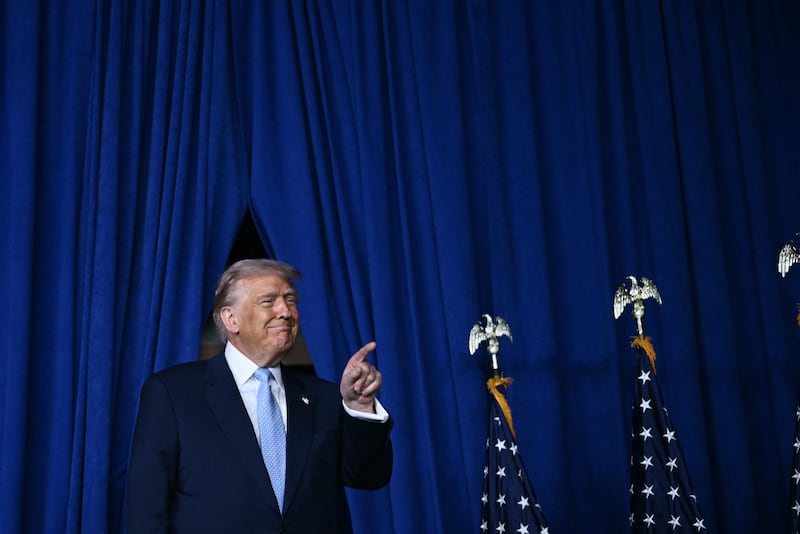
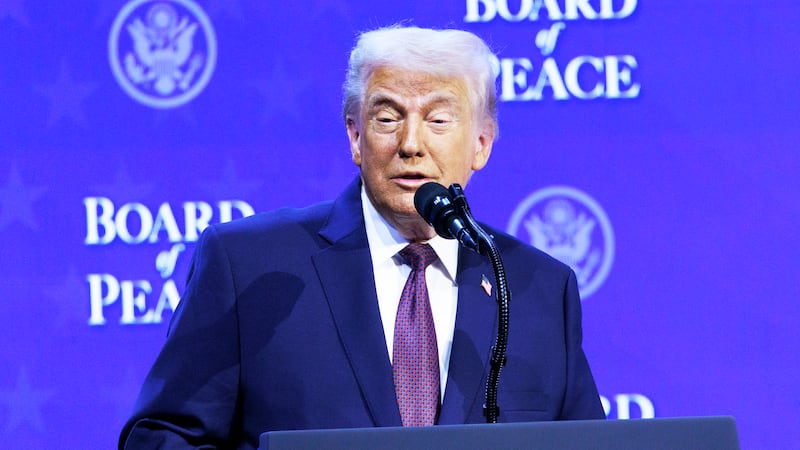
Meanwhile, the grift accelerates. A reported billion-dollar buy-in for Trump’s so-called “peace board” raises obvious questions about who controls the money and why it exists at all. The blurring is intentional. Expect more “boards,” more exclusive access schemes, more Mar-a-Lago-style membership fees disguised as legitimate governance.
Legally, the strategy is simple: delay everything. Drag lawsuits through the courts. Stonewall oversight. Fire watchdogs. Strip regulatory agencies. Run out the clock until pardons and immunity claims erase the paper trail.

Hovering over all of this is the Supreme Court’s immunity ruling that says presidents are immune from criminal prosecution for official acts, especially core constitutional duties, though not for purely private actions. Trump has barely leaned on it so far, but that will change. Expect it to be invoked to justify aggressive domestic deployments, unilateral foreign actions, coercion of federal agencies, and personal enrichment reconstituted as “official acts.”
Need a preview? Treasury Secretary Scott Bessent offered one with his recent defense of Trump’s new tariffs—which legally require a national emergency—by declaring that “the national emergency is avoiding a national emergency,” amid European nations’ pushback against Trump’s Greenland ambitions.
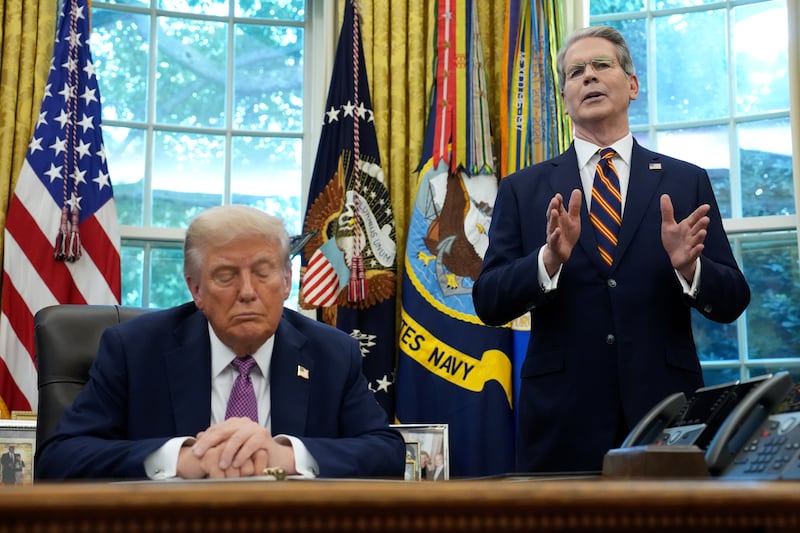
Yes, some of the scenarios that flow from this logic sound implausible, even melodramatic. Frankly, anyone who wagers a guess about what Trump could do is talking in a wind tunnel. But the things Trump has already done are what the media calls “unprecedented.”
Now ask yourself a simple question: What wouldn’t Trump do if it benefited him personally? Trump’s bottom line is always exactly that: his bottom line. Helping Republicans in the midterms offers him nothing. Enriching himself, testing judicial boundaries, and daring institutions to stop him offers everything.

The tragedy isn’t that we can’t imagine how far he’ll go. It’s that every time we say, “He’d never do that,” he treats it as a dare.
2026 won’t be the year the renegade Trump shocks us with something entirely new. It will be the year he proves that the limits we thought existed never did at all.