President Donald Trump’s deal with Iran has done little to boost his standing among his own voters.
Interviews conducted by Reuters with Americans who voted for the 80-year-old president suggest many remain skeptical of the agreement he struck this month to end the war that sent gas prices soaring above $5 a gallon.
One Trump voter went so far as to say they would think twice before backing candidates endorsed by the president in the upcoming midterm elections.
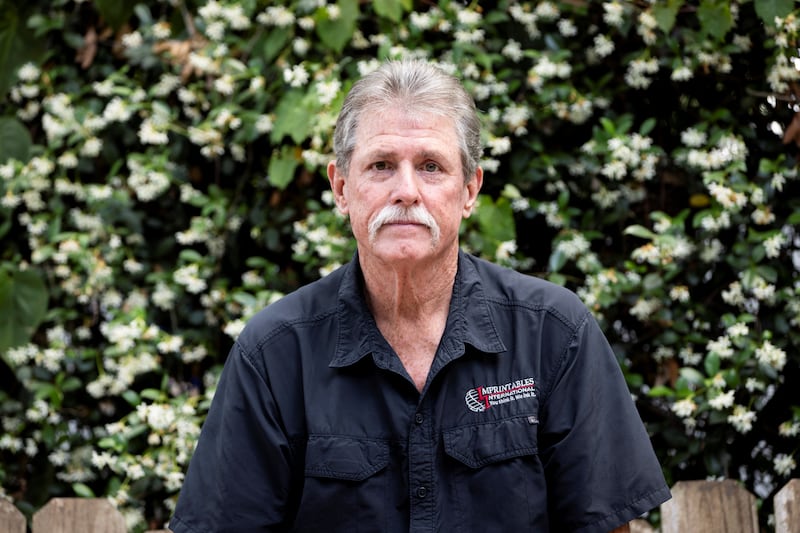
Steve Egan, 65, from Tampa, Florida, who voted for Trump but became disillusioned as the president’s 2025 tariffs hit his business, told Reuters that when deciding who to vote for in the upcoming midterm elections, any candidate endorsed by Trump would be “the kiss of death.”

So far, the president has maintained a strong record in Republican primary races involving candidates he has endorsed. A Newsweek tally found that at the beginning of the month, he had secured 14 wins and one loss.
The loss came in Iowa, where Trump-backed candidate Rep. Randy Feenstra was defeated in a gubernatorial primary by farmer and businessman Zach Lahn.
CNN chief data analyst Harry Enten described the trend as a “rural revolt,” saying Iowa had shifted from what he called a “field of dreams” to a “field of nightmares” for the president, with similar dynamics potentially emerging in other states that backed Trump in the 2024 election.

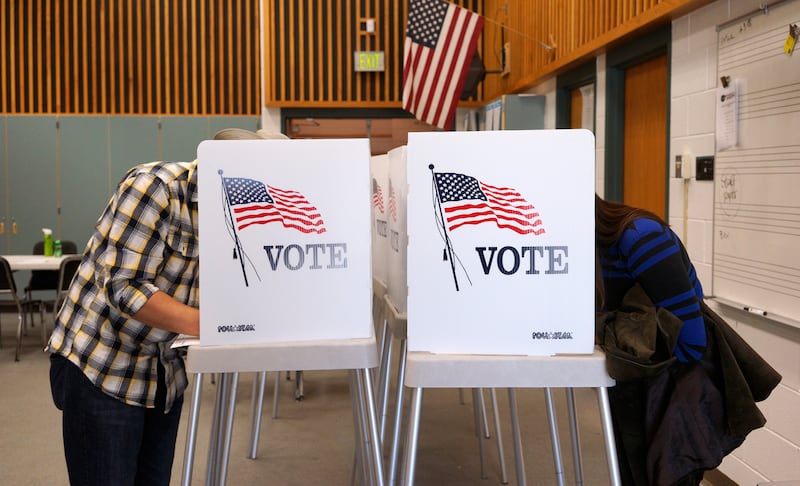
“A lot of people say, ‘Why should I vote when the president isn’t doing what he promised?’” said Juan Rivera, 26, who still plans to support Republican candidates in the midterms. He told Reuters that when he canvassed Latino voters in San Diego, many felt unmotivated to vote for the president’s party in November.
Hispanic voters were central to Trump’s 2024 victory, with the president winning 48 percent of the Latino vote—a 12-point improvement from four years earlier, according to the Pew Research Center. However, he is now losing support among this key voter bloc.
A number of Trump voters who spoke to Reuters said they were disappointed with the president’s handling of the war with Iran, arguing that he has not delivered on what he set out to achieve. Others said that entering the conflict ran counter to his earlier promise to avoid foreign entanglements.

“We need to truly weaken the Iranian regime instead of this, ‘beat them up a little bit and then step back and let them rebuild,’” Terry Alberta, 65, told Reuters. Rivera told the outlet that the president “criticized his predecessors about negotiating with terrorists, and he’s basically done the same exact thing.”
The White House did not immediately respond to a request for comment.
The president entered the war with Iran pushing for regime change and vowing to curb the country’s nuclear capabilities, a move initially supported by some of his voters until the conflict, expected to be short, dragged on.
The war, which deepened the affordability crisis after the closure of the Strait of Hormuz, sent gas prices soaring and pushed up grocery costs. Since then, the president’s approval rating has also fallen to a new low, dropping to around 35 percent.

Although the memorandum of understanding Trump signed on June 17 initially appeared to have broad support among Republican voters, the fine print has since prompted even prominent Republicans to question whether it delivers on the president’s stated objectives.
Karl Rove, a senior adviser to former Republican President George W. Bush, said the deal was full of “enormous concessions” that made the Trump administration “especially vulnerable.”
One Trump voter who spoke to Reuters said, in his view, the conflict benefited oil companies, while another argued it had triggered greater international hostility toward the United States. Six voters expressed support for the deal, but said they expected the president to go further on Iran, assuming he had more aggressive plans in the pipeline.