Follow Tom Sykes’ royal reporting at The Royalist on Substack, and get exclusive insight on everything going down behind the palace gates.
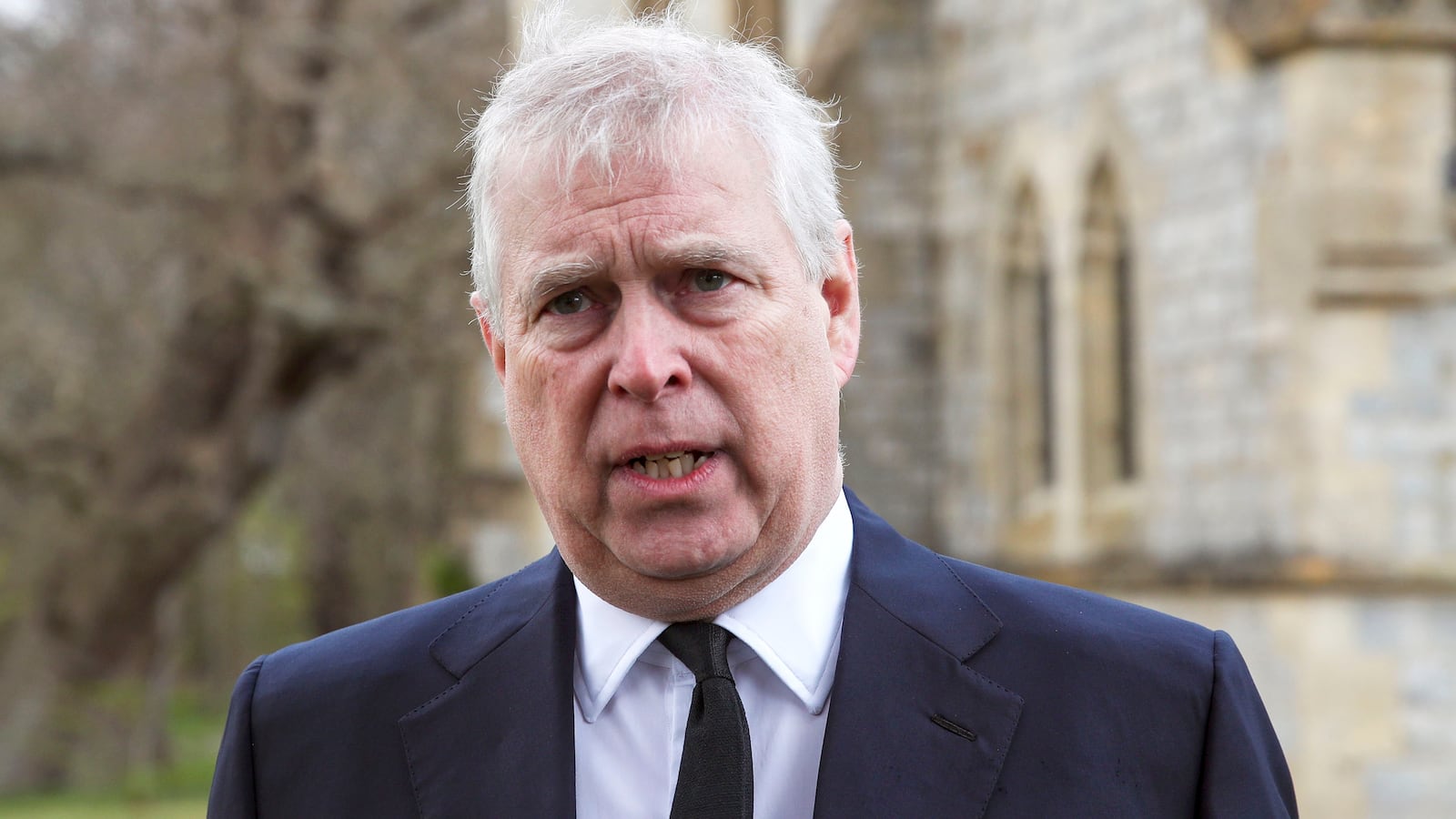
Confidential files have revealed how the late Queen Elizabeth II personally demanded Andrew Mountbatten-Windsor become Britain’s trade envoy.
Andrew demanded access to “youth” events and the “ballet” while on tours, they show.
Andrew was not vetted in any way for the role, a U.K. government minister said.
The documents were released by the U.K. government on Thursday, the culmination of a months-long parliamentary battle that brought one of the most obscure mechanisms in British constitutional procedure back into use.
They make astonishing reading, casting a new light on the entitled culture of royal impunity. It’s worth reading the whole lot here.
The documents, covering the period around Andrew’s 2001 appointment as Special Representative for International Trade and Investment, emerged from a process set in motion in February by the minority Liberal Democrat party, which tabled a motion to force the government to release files on his appointment to the role, including those relating to vetting.
The party deployed what is known as a “humble address”—a rarely used parliamentary procedure by which either the House of Commons or the House of Lords may petition the monarch, and by extension the government, to order documents be produced.
The procedure is used, among other things, to call for papers from departments headed by a Secretary of State and is generally considered binding on the government of the day.

After Andrew Mountbatten-Windsor was arrested on suspicion of misconduct in public office during his time as U.K. trade envoy—specifically, allegations that he passed sensitive government information to Jeffrey Epstein while holding the role—the U.K. government acquiesced to the request to release the files “as soon as is practicable and possible within the law.”
In a statement, trade minister Chris Bryant said: “We have found no evidence that a formal due diligence or vetting process was undertaken,” before Andrew was appointed, saying the appointment was treated as a continuation of the royal family’s existing trade promotion work following the Duke of Kent’s retirement from the Overseas Trade Board.
The documents are striking in what they reveal about the machinery behind Andrew’s appointment.
A memo from Sir David Wright, then chief executive of British Trade International, addressed to Foreign Secretary Robin Cook and dated February 25, 2000, states that “the Queen is very keen that the Duke of York should take on a prominent role in the promotion of national interests,” confirming that the appointment originated in a royal wish communicated through the Palace’s private secretary, not in any remote way through an assessment of Andrew’s suitability for the role.
Sir David noted that he had held “a wide-ranging discussion” with the Queen’s private secretary before proposing a role be found, and envisaged it would include “some regional trips and two or three overseas visits each year” as well as “a leading trade mission from time to time.”
He was candid that he “did not envisage that the Duke of York would want to be burdened with the regularity of meetings” of the BTI board.

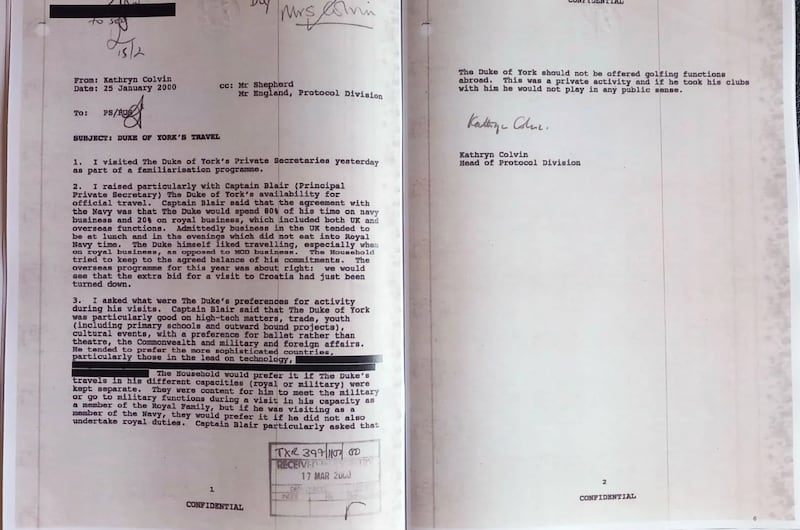
A separate letter from Kathryn Colvin, head of the Protocol Division at BTI, dated 25 January 2000, provides a disturbing portrait of Andrew as a working royal and the anxieties he generated in Whitehall.
The document records that Captain Blair, Andrew’s Principal Private Secretary, had “particularly asked that the Duke of York should not be offered golfing functions abroad. This was a private activity and if he took his clubs with him he would not play in any public sense.”
A separate internal telegram warned that Andrew’s “high public profile” would require “careful and sometimes strict media management,” with initial proposals requiring a joint media strategy be developed with the Palace.

The filing also records that Andrew “tended to prefer the more sophisticated countries, particularly those in the lead on technology,” and that he was “particularly good on high-tech matters, trade, youth, cultural events, with a preference for ballet rather than theatre, the Commonwealth and military and foreign affairs.”
A portion of the correspondence remains redacted, with the government citing the need to “remove the bare minimum of personal information and information whose release would prejudice international relations.”
The Liberal Democrats said the release is only the beginning.
Chief whip Wendy Chamberlain said the “lack of documentation provided is itself concerning, as is the time it has taken to get this far,” adding: “We must get the full files from government without delay.”

The party’s leader, Sir Ed Davey, apologized to victims of Jeffrey Epstein for comments he made praising Andrew during a 2011 parliamentary debate, while serving as trade minister in the coalition government, saying he was “pretty angry” about the position he had been placed in and did not know then what he knows now.
The procedural question of whether more documents will follow depends partly on the police investigation. MPs were told the government is unable to publish material that police need for their inquiries until officers are “satisfied.”
That investigation remains live, with Andrew released under investigation after his February arrest.
Meanwhile, the government confirmed it is working “at pace” on legislation to remove Andrew from the line of succession to the throne, with the trade minister telling MPs: “We intend to be able to bring forward legislation where we can.”
Want more royal gossip, scoops and scandal? Follow all Tom Sykes’ reporting at The Royalist on Substack or listen to The Royalist podcast on YouTube.