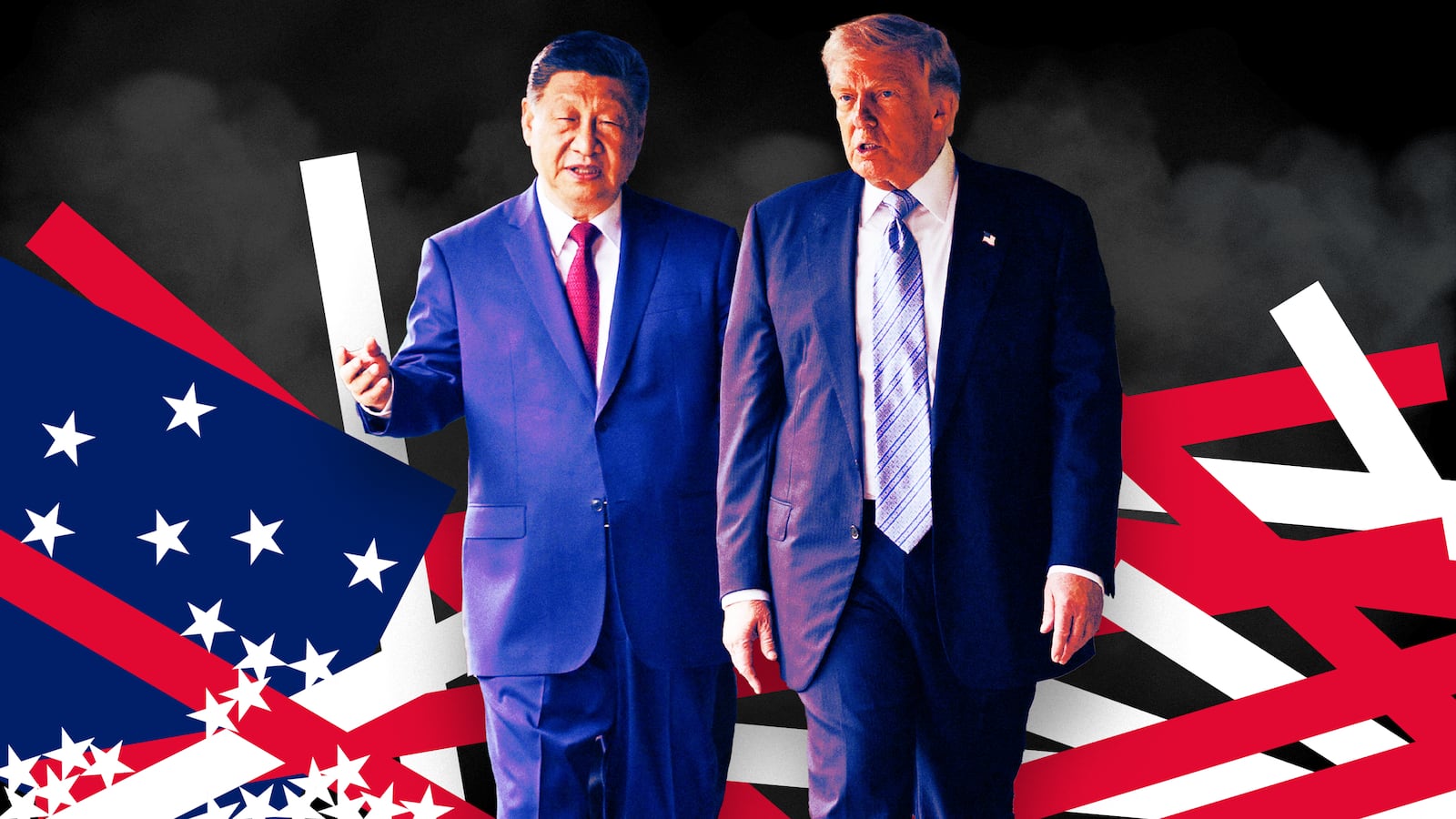
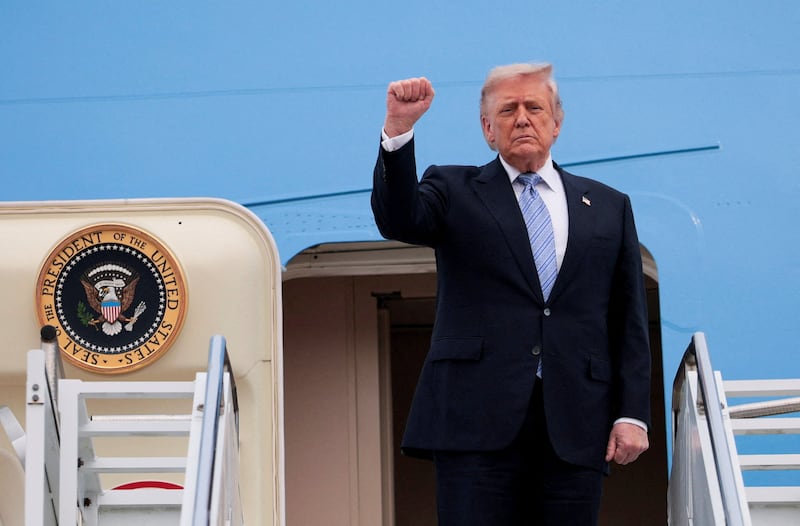
Flying back to the U.S. from Beijing, Donald Trump made it clear that he knew his state visit to China was a flop.
He was in a lousy mood.
In his answers to question after question from the press, he revealed that the trip produced no true deliverables. Some of these answers underscored the degree to which Trump was pretty much just a prop, used by China’s president Xi to illustrate China’s ascendancy.
He flattered Xi with praise. He let it be known that Xi had asked him whether he would defend Taiwan, and said he refused to answer the question. Maybe he thought that was deft statesmanship. But the reality is that Xi took it for what it was, a wink and a nod. Trump doesn’t care about Taiwan. Trump doesn’t care about anyone but Trump.
Admittedly, Trump did not start World War III. He did not deepen the economic chaos into which his tariffs and his Iran War have thrown the planet. He spoke of trying to develop a better relationship with China.
Give him some credit for all that.
But acknowledge that we have never seen a trip quite like this one in the 120 years since Theodore Roosevelt made the first foreign trip by a U.S. president.
Trump thought the summit and his proximity to Xi would burnish his deteriorating reputation. Not only did it do the opposite, but it actually undercut the standing of the United States.

If there was one grand theme of the trip—made clear through the remarks of Xi, Trump’s response to those remarks and the broader behavior of the Chinese and U.S. delegations—it is that the U.S. is a declining power and China is in its ascendancy.
Xi made that clear when he framed his opening remarks in the context of the Thucydides Trap, a geopolitical theory that talks about the likelihood of conflict between rising powers and the established or declining ones they are supplanting. Trump, of course, had no idea what he was talking about. But when someone eventually explained it to him, Trump produced a Truth Social post which made reference to Xi talking about American decline, which he did not take any umbrage with and rather, used as an opportunity to agree with Xi, to the extent he was referring to America failing under Joe Biden. A very weak response from a weak leader.
But the optics and flow of the entire meeting underscored the new power relationship between China and the U.S. Xi was the emperor. Trump was the kowtowing supplicant. Xi was polite to Trump and praised him. But he gave him nothing. He dictated the tenor and tone of the conversation.
Trump wanted China’s help with reopening the Strait of Hormuz. He said he raised it with China, but China did not offer any such help. He said he asked China not to supply Iran with weapons. He said China promised they wouldn’t, but China didn’t actually say that either, and will likely continue providing Iran with vital support for its military and government. Trump wanted major progress on trade. He did not get that. He wanted to announce big deals. The U.S. even announced one for 200 Boeing aircraft, but there was no signing ceremony. Trump wanted progress on AI. He got, apparently, only an agreement to discuss guardrails in the future. Trump wanted a big deal for U.S. farmers and ended up defending the idea that China should be allowed to buy U.S. farmland.
Trump wanted to appear as Xi’s peer. Instead, it was clear he was the man with most of the asks—and Xi was not giving in. When it came to Xi’s demands that the U.S. stay out of its relations with Taiwan, the U.S. was muted. Marco Rubio said that the outcome China really wanted would be a peaceful reunification. Which is surely true. But neither he nor the president would offer strong language that the U.S. would intervene if the effort at reunification was not peaceful.

Trump essentially came away empty-handed, albeit pleased that Xi would come to the U.S. for another meeting in September.
On the plane back, it was also clear that the trip did not distract from Iran as Trump had wanted. He lashed out at New York Times reporter David Sanger, saying he was a traitor for not reporting that Trump had achieved a major military victory. However, not only is the conflict in Iran no closer to being resolved, and American goals are no closer to being achieved, but a subtext of the China trip was that one of the big beneficiaries of the war’s many unintended consequences was China. Rising oil prices may put pressure on China, but in a way that is manageable for the moment due to the country’s oil reserves and some continuing flow of oil from Iran. But those higher prices are also creating more demand for green tech and EVs, fields in which the Chinese lead the world.
The fact that Trump had to go to China to beg for its assistance in cleaning up his mess in the Middle East also reflected well on Xi. China appeared the champion of global stability. Trump appeared to be the unhinged leader of a rogue state. China has geopolitical momentum. The U.S. does not. And if you doubt that, the group of American moguls that came with Trump to seek favors and market access from Xi only underscored the power dynamic.
The trip was so devoid of solid outcomes that, on the plane back, Trump even riffed on the quality of Chinese ballrooms, explaining that’s why the U.S. needed the golden boondoggle by the White House that he is trying to build. Who knew there was a ballroom gap that was threatening U.S. national security?
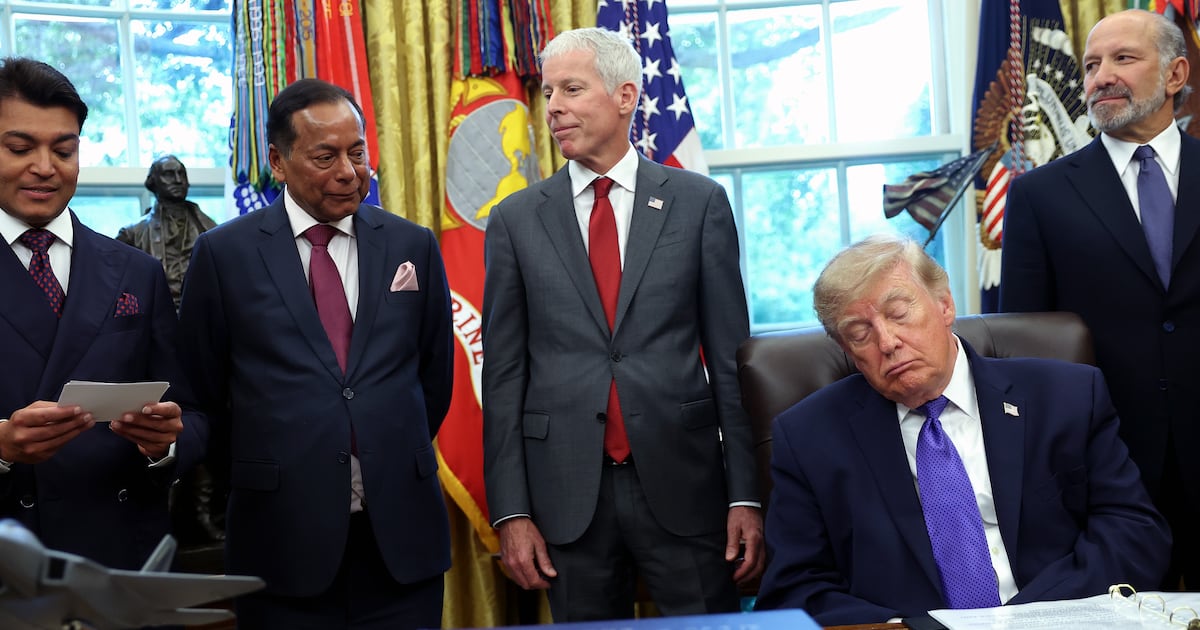
Of course, Trump brings up his ballroom obsessively, and that speaks to another final point illustrated by the trip: the obvious decline of Trump’s rapid mental and physical state. At times, he could barely stay awake. He did not seem to follow much of what was happening around him. He had trouble walking. It was clear that whatever intravenous treatment he is receiving through his hands is making them look gnarlier and gnarlier. He was clearly the elderly visitor being tended to by his far more vigorous host.

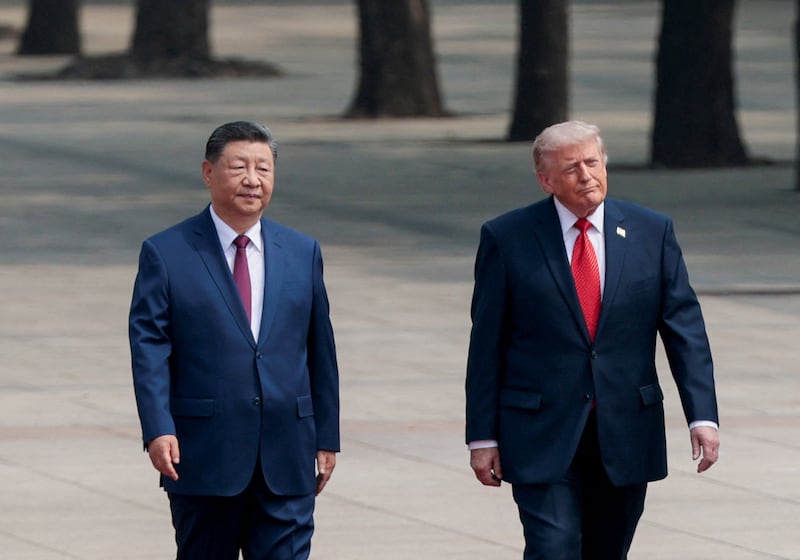
Standing next to the 5’ 11” Xi, it appeared the reputedly 6’ 3” Trump was now the same size as China’s president. Our president is shrinking in every possible way. Unfortunately, along with his diminishment, given the power he still holds and wields irresponsibly, our standing as a nation is also being reduced.
Indeed, if this Beijing summit is illustrative of current trends as it appears to be, Trump should be pleased he even appeared, at least optically, to be of comparable stature to Xi. Because—at least with Trump at America’s helm—that does not seem likely to happen again.