
Maybe we were a little premature on the whole “No Kings” thing. An actual monarch showed up in the US this week, and it went great? He gave a little speech in that plummy accent of his, inspected the newly expanded White House beekeeping facilities—first I’m hearing about the White House beehives, do they get a ballroom too?—attended a fancy dinner, and, somehow, did not make a complete fool of himself. Most importantly, of course, he presented the president with a great shiny Trump-branded bell. God forbid he showed up with some duty-free Cadbury’s chocolate. While I’m not yet ready to reapply for membership to the United Kingdom, can we at least get the telephone number of whichever charm school King Charles III attended?
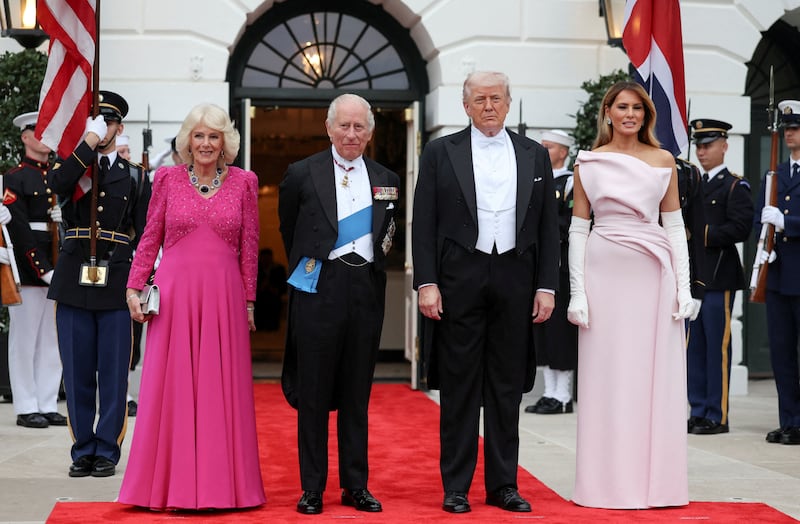
Charles and Queen Camilla’s visit is, on paper, designed to commemorate the 250th anniversary of American independence. The actual occasion, however, is a desperate attempt to shore up the long-vaunted “special relationship” between the US and the UK.
British-American relations have come under increased stress in this second Trump administration. Trump has criticized UK Prime Minister Keir Starmer’s government on everything from tariffs to immigration to windmills. Always windmills. The most serious blow to the relationship has come following the U.K. declining to join the Iran War and Great Britain’s initial refusal to allow American military aircraft to use their base in Diego Garcia, in the Indian Ocean, for bombing runs. Trump, as you may have heard, does not like to be told no.
Enter the good king. Trump’s infatuation with the British monarchy is well-documented. Maybe he likes the pomp, or the bling—certainly the ye olde absolutism of it all. Maybe he’s just itching to point at Jimmy Kimmel and say, “Off with his head.” Whatever the reason, the Brits are obviously well aware of his boyish enthusiasm. Trundling Charles and Camilla off to the Colonies must have seemed like a good bet.
It’s a bet that seems to be paying off.
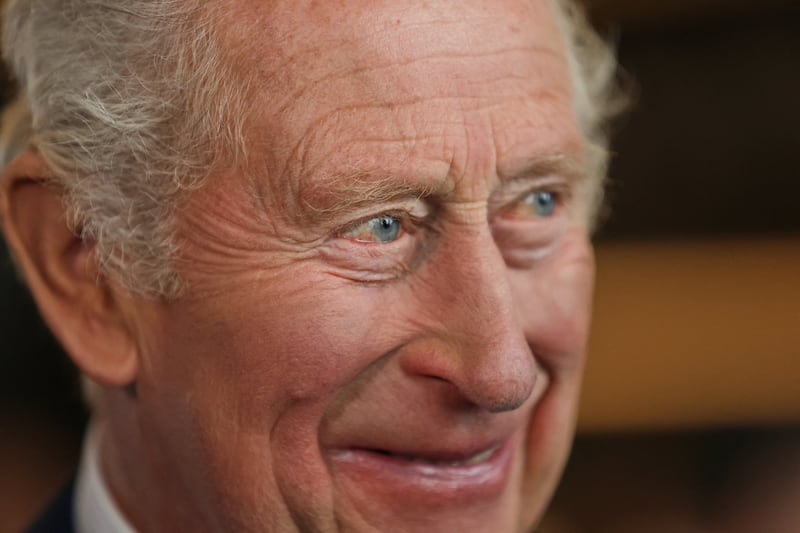

Reviews of King Charles’ lighthearted but occasionally pointed speech to Congress have been, largely, glowing. Some lines proved more popular than others, of course, with several Republicans sitting on their hands as Charles sought American support for Ukraine, NATO, and climate initiatives. But a reference to the Magna Carta, however, brought the chamber to its feet: “The U.S. Supreme Court Historical Society has calculated that Magna Carta is cited in at least 160 Supreme Court cases since 1789,” Charles noted, “not least as the foundation of the principle that executive power is subject to checks and balances.”
That last bit is being widely viewed as a veiled swipe at the Oval Office’s current occupant. And while checks and balances—terms Trump only really likes hearing when they relate to his bank account—are surely in short supply these days, it’s important to remember that the Magna Carta’s deeper purpose was to force constraints on monarchical power, establishing the principle that all are subject to the force of law.
Such an idea used to be pretty commonplace in these here United States, at least before the current Supreme Court threw that particular baby out with the legislative bathwater. How pathetic that it took a living, breathing king to remind Americans that not even kings are above the law.
On matters of law and diplomacy, one can argue with Charles’s decision not to meet with Epstein survivors during his trip to the States, but one cannot dispute that he stripped his brother of all titles and kicked him out of his house following revelations of the Royal-Formally-Known-As-Prince-Andrew’s deep entanglements with the pedophile. Of course, it seems like one of the only people closer to Epstein was Trump; might it be possible to grant the king temporary dispensation to do to the president what he did to his brother?

One overlooked advantage of monarchy that Great Britain still enjoys is the unique role—even if largely ceremonial—the royal family plays as guardians of their nation’s history and legacy. (Also, they own all the swans? Seems nice.) As Charles himself pointed out in his speech to Congress, our nation’s history began, as he put it, with “a tale of two Georges.” Our George was, of course, Washington. The other was, as he said, “My five-times-great-grandfather King George III.”
In other words, Charles’ view of the special relationship is far more than a convenient historical union. It’s his family history. Viewed through that long lens, our nation’s current woes may not seem quite so terrible. Of course, some of Charles and Camilla’s good cheer may owe something to the notion that this former British protectorate is now getting her overdue comeuppance. One might even view his address to Congress as a warning from an older cousin who’s been there, done that. “The sun set on the British Empire long ago,” he might have said, before adding, “Do not allow your own star to fade so easily.”
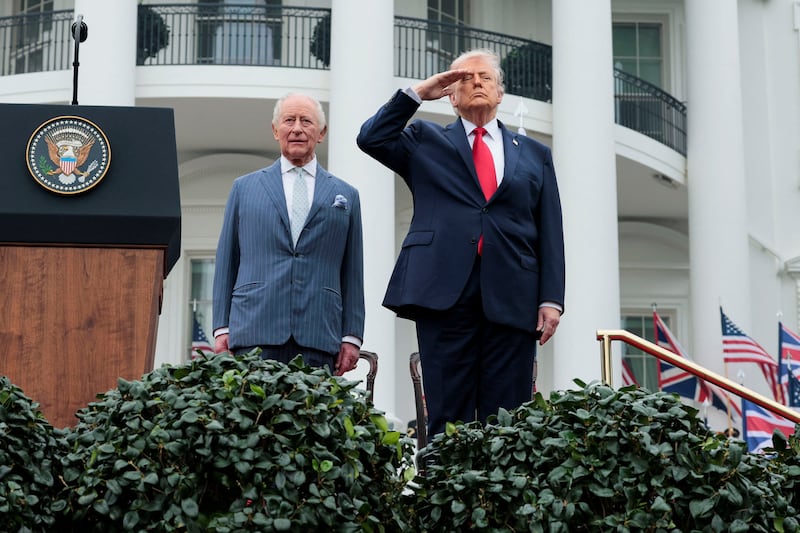
There’s something faintly absurd about the dynamic: a hereditary monarch lecturing a republic on democratic norms and being applauded for it. But absurdity is the lingua franca of our current American moment. When the most coherent articulation of American constitutional ideals comes from a visiting sovereign, it suggests those ideals might have lost a little purchase here at home.
Whether the United States is in one of those “losing its way” moments is, of course, a matter of opinion. But if a gentle reminder that power should be constrained by law is what passes for a stabilizing force in 2026, then perhaps we’re not just flirting with decline; we might be workshopping it. If that’s the case, we don’t need a king. But we could probably use a few more people who remember why we got rid of one in the first place.
So England? If we could borrow your monarch for a few more weeks to help straighten things out, we’d appreciate it. No hijinks with the tea this time either, we promise. Thank you for your attention to this matter.